IN 1962 a British political scientist, Bernard Crick, published “In Defence of Politics”. He argued that the art of political horse-trading, far from being shabby, lets people of different beliefs live together in a peaceful, thriving society. In a liberal democracy, nobody gets exactly what he wants, but everyone broadly has the freedom to lead the life he chooses. However, without decent information, civility and conciliation, societies resolve their differences by resorting to coercion.
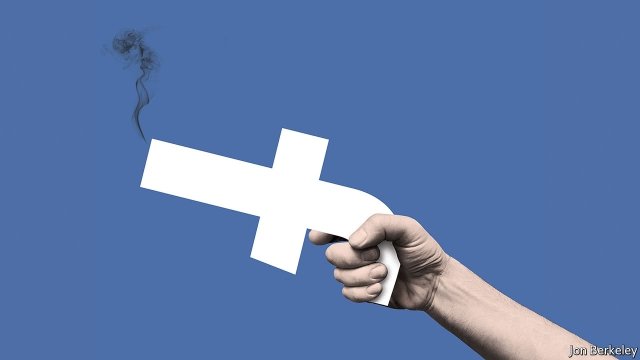
How Crick would have been dismayed by the falsehood and partisanship on display in this week’s Senate committee hearings in Washington. Not long ago social media held out the promise of a more enlightened politics, as accurate information and effortless communication helped good people drive out corruption, bigotry and lies. Yet Facebook acknowledged that before and after last year’s American election, between January 2015 and August this year, 146m users may have seen Russian misinformation on its platform. Google’s YouTube admitted to 1,108 Russian-linked videos and Twitter to 36,746 accounts. Far from bringing enlightenment, social media have been spreading poison.
Russia’s trouble-making is only the start. From South Africa to Spain, politics is getting uglier. Part of the reason is that, by spreading untruth and outrage, corroding voters’ judgment and aggravating partisanship, social media erode the conditions for the horse-trading that Crick thought fosters liberty.
A shorter attention spa…oh, look at that!
The use of social media does not cause division so much as amplify it. The financial crisis of 2007-08 stoked popular anger at a wealthy elite that had left everyone else behind. The culture wars have split voters by identity rather than class. Nor are social media alone in their power to polarise—just look at cable TV and talk radio. But, whereas Fox News is familiar, social-media platforms are new and still poorly understood. And, because of how they work, they wield extraordinary influence.
They make their money by putting photos, personal posts, news stories and ads in front of you. Because they can measure how you react, they know just how to get under your skin (see article). They collect data about you in order to have algorithms to determine what will catch your eye, in an “attention economy” that keeps users scrolling, clicking and sharing—again and again and again. Anyone setting out to shape opinion can produce dozens of ads, analyse them and see which is hardest to resist. The result is compelling: one study found that users in rich countries touch their phones 2,600 times a day.
It would be wonderful if such a system helped wisdom and truth rise to the surface. But, whatever Keats said, truth is not beauty so much as it is hard work—especially when you disagree with it. Everyone who has scrolled through Facebook knows how, instead of imparting wisdom, the system dishes out compulsive stuff that tends to reinforce people’s biases.
Más información: http://econ.st/2hAoJKL